
Fire ants
Fire Ant Control in Missouri City, TX
Imported red fire ants own the Gulf Coast. In gumbo clay they build the mounds you see after every rain, and a single sting teaches you to take them seriously.
Fire ant control in Missouri City is a year-round job because the imported red fire ant never really stops. Solenopsis invicta arrived in Texas decades ago and found the Gulf Coast climate and the heavy clay soil close to ideal, and Fort Bend yards show the result after every rain: fresh mounds pushed up overnight across the lawn.
Why gumbo clay is a fire ant factory
Houston black clay, the "gumbo" that every Missouri City yard sits on, shrinks and cracks in the dry heat and swells shut when it rains. Fire ants use that. They nest deep to reach moisture in a drought and push their mounds up above the wet soil after a storm to warm the brood. That is why the mounds seem to appear from nowhere the morning after a rain, they were there all along, the colony just moved up.
A fire ant colony holds one or several queens and up to a couple hundred thousand workers, and the whole thing can relocate overnight if it is disturbed. That mobility is exactly why the hardware-store approach fails. Pour boiling water or a contact dusting on a mound and you kill the workers on top and the queen moves the colony three feet over. Two weeks later there are two mounds where there was one.
The sting, and who is most at risk
Fire ants swarm when the mound is disturbed and they sting in unison, which is why a person who steps in a mound gets dozens of stings in seconds. The sting leaves the characteristic white pustule a day later. For most people it is painful and itchy and passes. For a small number it triggers a serious allergic reaction, and for those people a fire ant colony beside the front walk, the mailbox, the patio, or a child’s play set is a genuine hazard, not a nuisance.
The people most at risk are the ones who cannot see or feel the ants in time: toddlers on the grass, elderly residents, pets, and anyone with a known ant or insect-sting allergy. On those properties, treatment is about safety, not just a tidy lawn.
How a local exterminator treats fire ants
The method that actually works is the two-step approach that Texas A&M has taught for years, adapted to the property. A broadcast bait goes across the whole yard, not just the visible mounds, because the workers carry the slow-acting bait down and feed it to the queen and the brood, which eliminates colonies you never saw. Then individual mound treatments handle the stubborn or high-traffic mounds directly for a faster knockdown near the door, the patio, and the play set.
Timing matters. Bait works best when the ants are actively foraging, which on the Gulf Coast is most of the warm year, and it works poorly when it is very hot and dry at midday or right before a rain that will wash it away. An experienced local exterminator times the bait to the weather and the ant activity, treats the whole yard rather than chasing mounds, and comes back, because fire ants re-invade from the neighbor’s yard and the common area no matter how clean your own turf is.
- A whole-yard broadcast bait the foragers carry back to the queen
- Direct treatment of high-traffic mounds near doors, walks and play areas
- Timing around foraging activity and the weather, so the bait is not wasted
- A plan for re-invasion from neighboring yards and community common areas
- Attention to the moisture and the mulch lines that make the yard attractive
Why they always come back
Fire ants are the definition of a whole-yard problem rather than a one-mound problem. Your yard sits in a sea of colonies, in the neighbor’s lawn, the esplanade, the detention pond bank, the school field, and reproductive queens fly and start new colonies every warm season. No single treatment makes a yard permanently fire-ant-free, and any company that promises that is selling something.
What a good program does is keep the population knocked down to where the yard is usable and safe, with periodic broadcast baiting timed to the season and quick mound treatments as they appear. On a property with a child, a pet, or an allergic resident, that ongoing control is the point.
Read more on fire ants and the gumbo-clay problem, or call 281-801-0043 and describe what you are seeing.
fire ants and the gumbo-clay problem · All pest control services in Missouri City
Related
People who called about this also called about

Ants in Missouri City
Fire ants get the headlines, but the ants inside your house are usually a different species, and the tawny crazy ant is its own special Gulf Coast problem.
Learn more about ants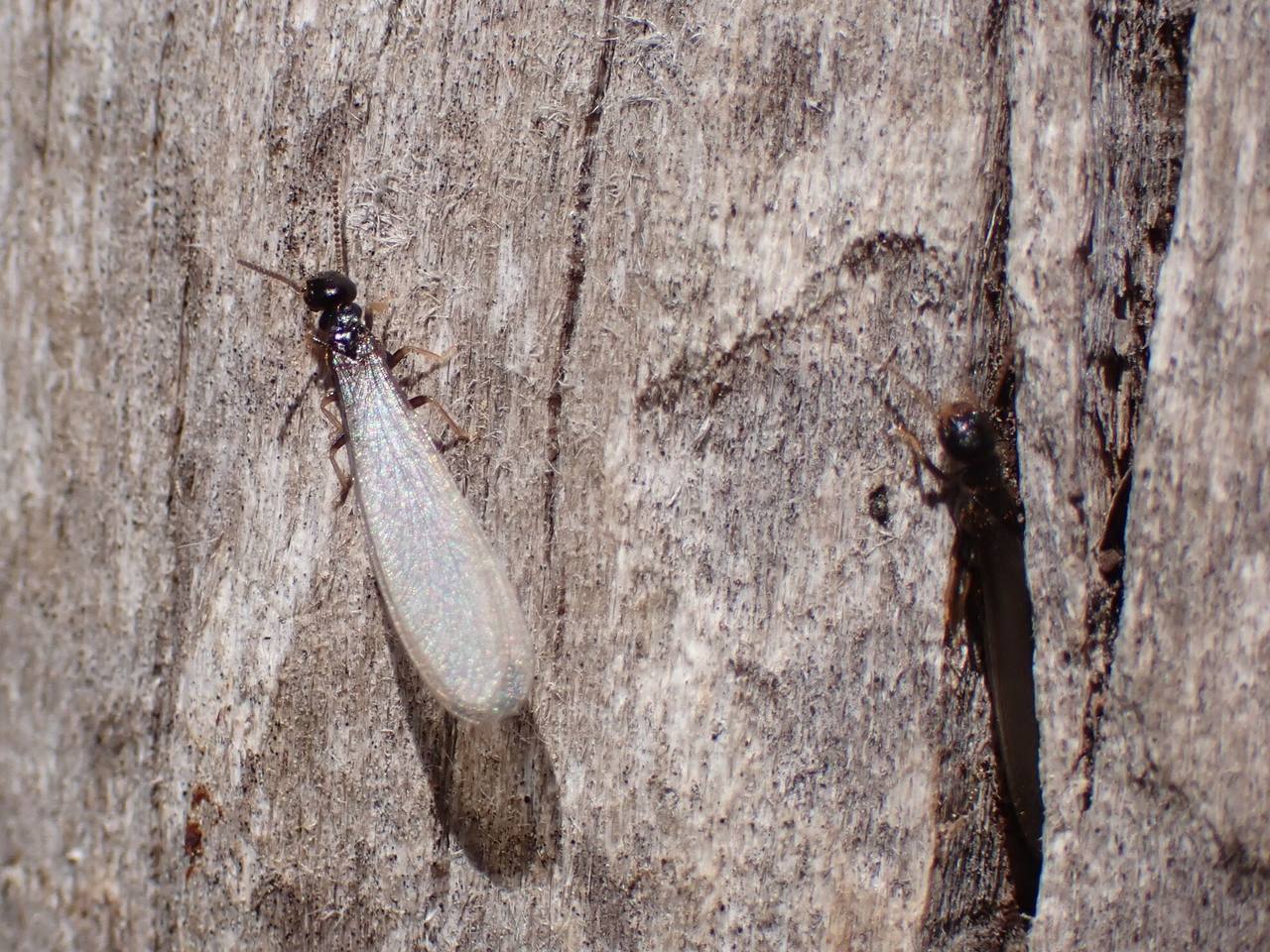
Termites in Missouri City
The Gulf Coast has the worst termite pressure in Texas, and the Formosan is the reason. On a slab home the damage is done before you ever see a swarmer.
Learn more about termitesQuestions
Fire Ants in Missouri City, answered
Why do fire ant mounds appear right after it rains?
The colony is already there. Fire ants push their mounds up above the saturated clay after rain to warm the brood in the sun, so a mound that seems to appear overnight is really a colony moving up, not a new arrival.
Why does pouring stuff on the mound not work?
A contact treatment on top kills the workers you can see, but the queen simply relocates the colony a few feet away, and the colony survives. Baits that the workers carry back to the queen are what actually eliminate a colony.
Can you get rid of fire ants permanently?
Not permanently, because reproductive queens keep flying in from neighboring yards and common areas. A good program keeps the population knocked down and the yard usable with seasonal baiting and mound treatments, which is the realistic goal here.
Are fire ants dangerous?
For most people the stings are painful and pass. For anyone with a sting allergy, and for toddlers, pets and elderly residents who cannot get away quickly, a colony near the door or the play set is a real hazard worth treating on safety grounds.
Call now
Tell us what you are seeing, and where
Describe the pest, the property and how long it has been going on. You will get straight answers and an honest estimate before any work starts. No obligation.
Calls answered 7am to 9pm, seven days a week