Why the clay is the whole story
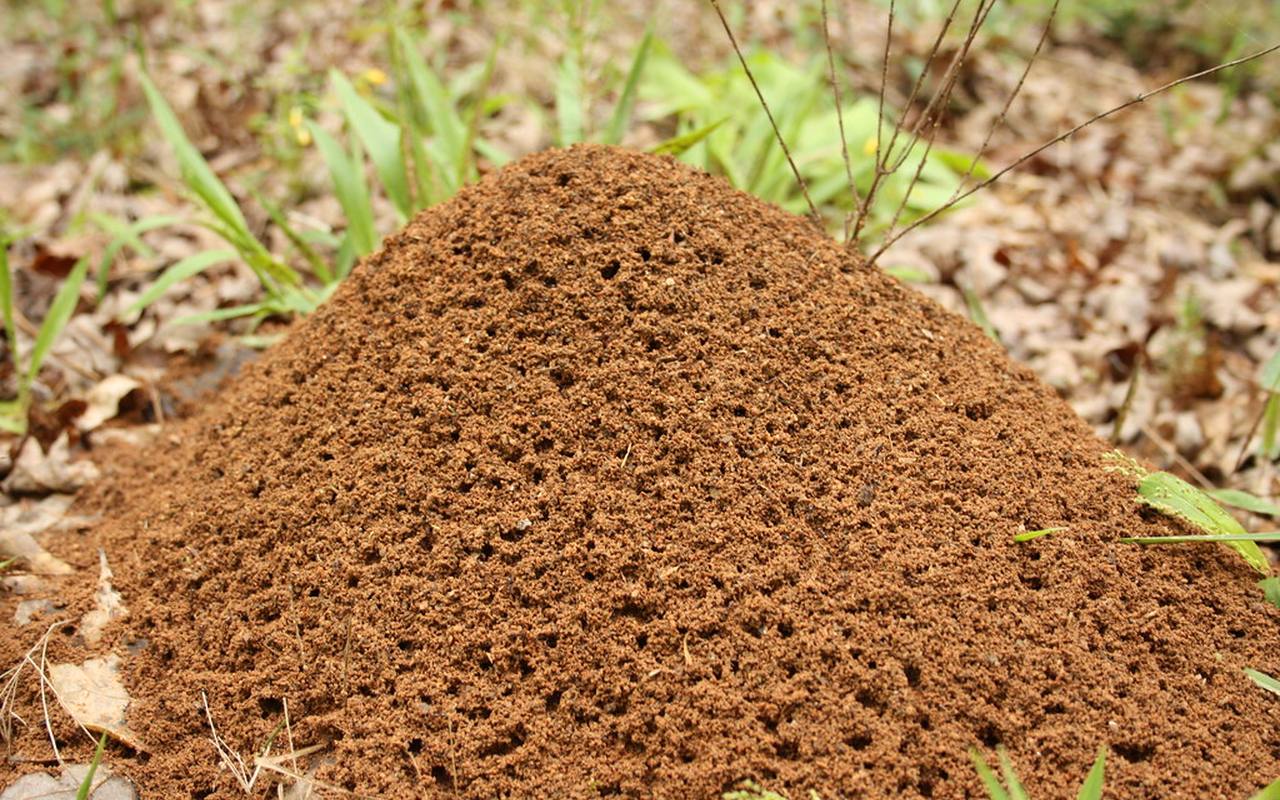
Houston black clay, the gumbo that every Missouri City yard sits on, is expansive soil: it swells and seals shut when wet and shrinks and cracks when dry. Fire ants have adapted to it perfectly. In a dry spell the colony nests deep to reach the moisture the clay holds down low. After a rain the saturated soil is too wet down deep, so the colony pushes its mound up above the surface to warm the brood in the sun and shed water. That is why the mounds seem to appear overnight after a storm: the colony was there the whole time, it just moved up.
The same shrink-swell behavior that makes the mounds also cracks slabs and driveways, which is a termite and roach entry story of its own, but for fire ants the point is simple. The clay guarantees a permanent, moisture-driven fire ant population that resurfaces with every rain.
Why the store-bought approaches fail
Pouring boiling water, gasoline, or a contact insecticide on a mound kills the workers on top, and sometimes it feels like a win because the mound goes quiet. But a fire ant colony has one or several queens buried deep, and when the colony is disturbed the queens simply relocate, often just a few feet away. Two weeks later there are two mounds where there was one. Mound-by-mound contact treatment is a game the ants win, because you are only ever hitting the part of the colony you can see.
Broadcasting a cheap contact insecticide over the whole lawn has the same flaw and adds a new one: it kills the native ants that compete with fire ants and otherwise slow them down, which can leave the yard more fire-ant-prone, not less.
The two-step approach that works
Texas A&M has taught the two-step method for years, and it is what an experienced local exterminator uses, adapted to the property. Step one is a whole-yard broadcast of a slow-acting bait. The foragers carry the bait back and feed it to the queens and the brood, which eliminates colonies you never spotted, not just the visible mounds. The bait is slow on purpose, so the workers share it before it acts. Step two is a direct treatment of the individual high-traffic mounds near the door, the walk, the patio, and the play set, for a faster knockdown where it matters most for safety.
Timing is everything with bait. Fire ants have to be actively foraging to pick it up, which on the Gulf Coast is most of the warm year, and the bait must go down when it is not baking hot at midday and not about to rain, which would wash it away. This is a big part of why professional baiting outperforms a homeowner scattering bait at the wrong time.
Living with a permanent neighbor
No treatment makes a Missouri City yard permanently fire-ant-free, because reproductive queens keep flying in from the neighbor’s lawn, the esplanade, the detention-pond bank, and the school field every warm season. Anyone promising permanent elimination is selling something. What a good program does is keep the population knocked down to where the yard is usable and safe, with seasonal broadcast baiting and quick mound treatments as they appear.
On a property with a toddler, a pet, or anyone with a sting allergy, that ongoing control is not cosmetic, it is a safety measure. Texas A&M AgriLife Extension publishes free, detailed guidance on the two-step method and bait timing for exactly this soil and climate.
Further reading: Texas A&M imported fire ant program.
If you would rather hand this to somebody, see Fire Ant Control in Missouri City, TX or call 281-801-0043.